 Popular
Juvederm vs Restylane vs Bellafill: How the Ranges Differ
8 min read · Updated 22 August 2026
A practitioner-facing comparison of three widely used filler families — base material, reversibility, typical longevity and where each range fits.
The short version
Juvederm and Restylane are both hyaluronic acid families — reversible, immediately volumising, and differentiated mainly by how each manufacturer cross-links and textures the gel. Bellafill is a different class entirely: polymethyl methacrylate microspheres suspended in bovine collagen, designed as a long-lasting, non-reversible implant.
That single distinction — reversible gel versus permanent microsphere implant — drives almost every practical decision between them.
Side-by-side
| Juvederm | Restylane | Bellafill | |
|---|---|---|---|
| Base material | Cross-linked hyaluronic acid | Cross-linked hyaluronic acid | PMMA microspheres in bovine collagen |
| Gel technology | Smooth, cohesive gel | Particulate and smooth gels across the range | Suspension, not a gel |
| Reversible | Yes, with hyaluronidase | Yes, with hyaluronidase | No |
| Longevity horizon | Months to over a year by product | Months to over a year by product | Years — positioned as long-lasting |
| Allergy testing | Not routinely required | Not routinely required | Skin test required due to bovine collagen |
| Best suited to | Lift, contour and lips with adjustability | Lift, contour and lips with adjustability | Patients seeking durability and accepting permanence |
Juvederm in practice
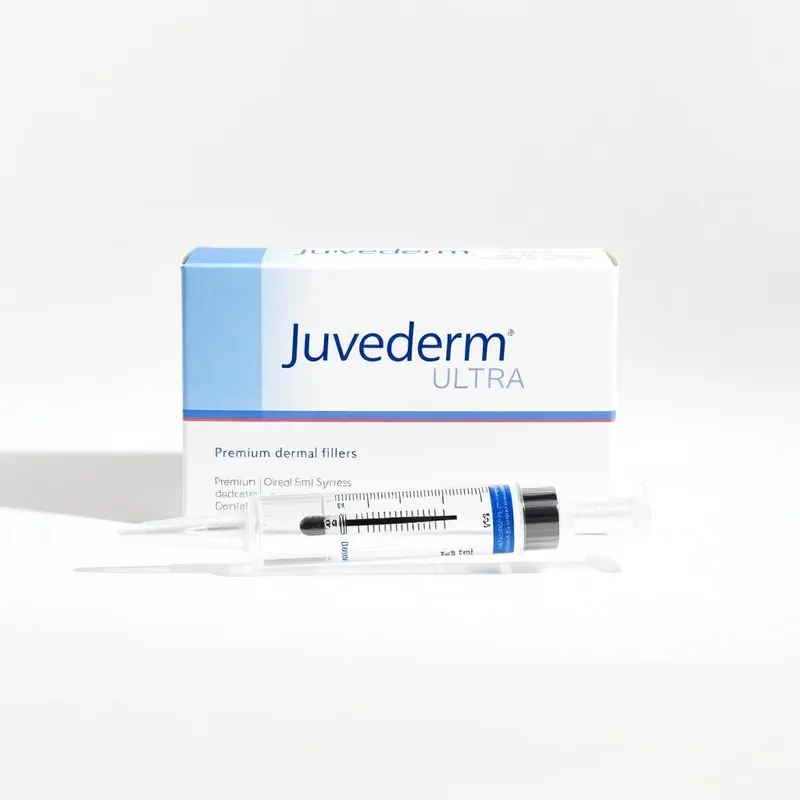
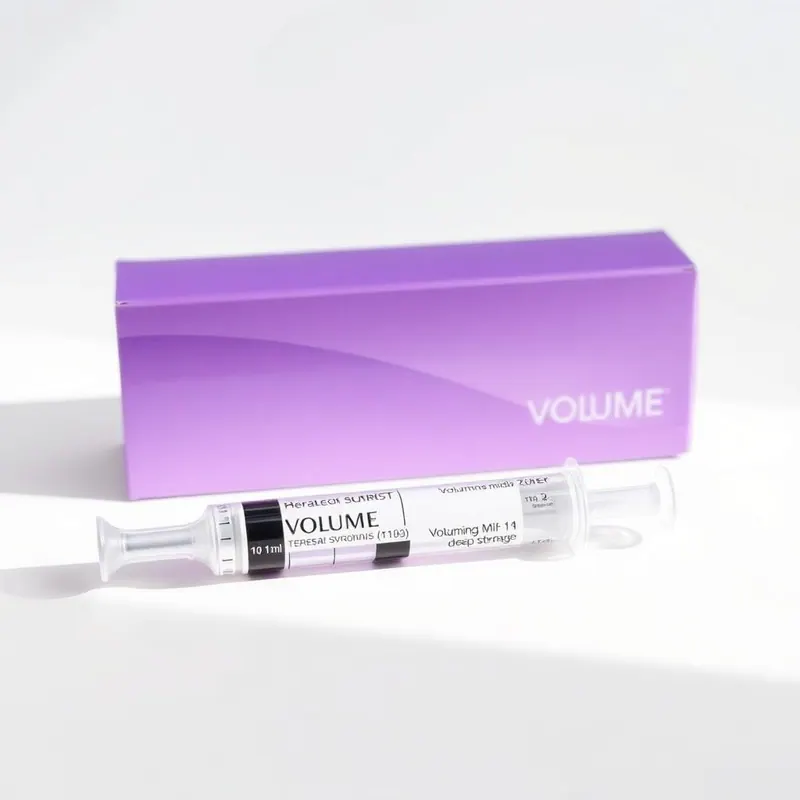
The Juvederm range is built around smooth, cohesive gels. Practitioners often reach for it where a seamless, integrated feel is the priority — lips and soft tissue transitions — with firmer products in the range reserved for deep structural placement.
Restylane in practice
The Restylane family spans both particulate gels, which hold shape and resist spread, and smoother formulations. That breadth means the choice within the range matters as much as the choice of range: a firm particulate product and a soft flexible one behave very differently in the same anatomical site.
Bellafill in practice
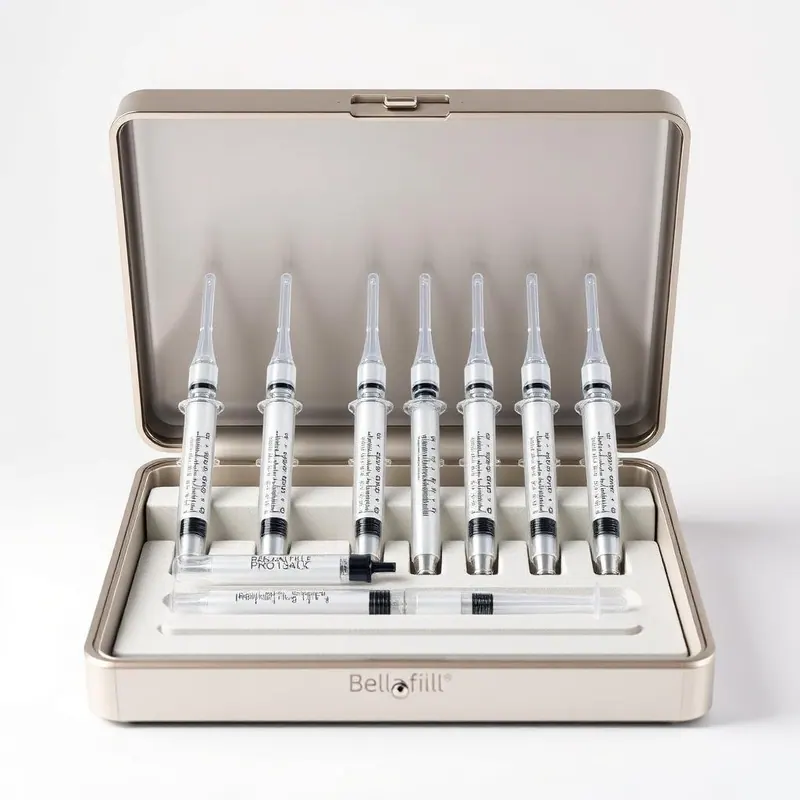
Bellafill's microspheres are not absorbed. The collagen carrier provides immediate volume while the microspheres remain as a permanent scaffold. This makes patient selection and conservative dosing critical, because the result cannot be dissolved if the patient changes their mind or the face changes with age. A skin test precedes treatment because of the bovine collagen component.
How to choose
- First-time patient, or an area prone to over-correction — favour a reversible hyaluronic acid product.
- Structural lift on bone — favour a firm, highly cross-linked gel regardless of family.
- Lips and fine lines — favour a soft, flexible gel.
- Established patient with a stable, predictable result seeking durability — a long-lasting implant becomes a reasonable discussion.
- Any doubt about permanence — choose the reversible option.
Sourcing note
Brand-name injectables are among the most counterfeited products in aesthetics. Whichever range you choose, buy through a channel that gives you supplier verification, batch traceability and payment protection until the goods arrive as described.
Frequently asked questions
- Is Bellafill better than Juvederm or Restylane?
- They solve different problems. Bellafill is positioned for durability and is not reversible; Juvederm and Restylane are hyaluronic acid gels that can be dissolved with hyaluronidase. Reversibility, not longevity alone, is usually the deciding factor.
- Can Juvederm and Restylane be used in the same patient?
- Practitioners commonly select different products for different planes and areas within one treatment plan. What matters is matching gel behaviour to the plane rather than staying within a single brand.
- Does Bellafill need an allergy test?
- Yes. Bellafill contains bovine collagen as its carrier, so a skin test is performed before treatment. Hyaluronic acid fillers do not routinely require this.
Related products
Popular Popular
 Popular
 Popular
 Popular
 Exclusive